Aug 11, 2026 · Sourcing · 8 min read
Rice Straw vs Wood Wool vs Chemical Firelighters Compared
The criteria that decide a listing, the evidence to demand for each one, and where each firelighter type usually gives way.
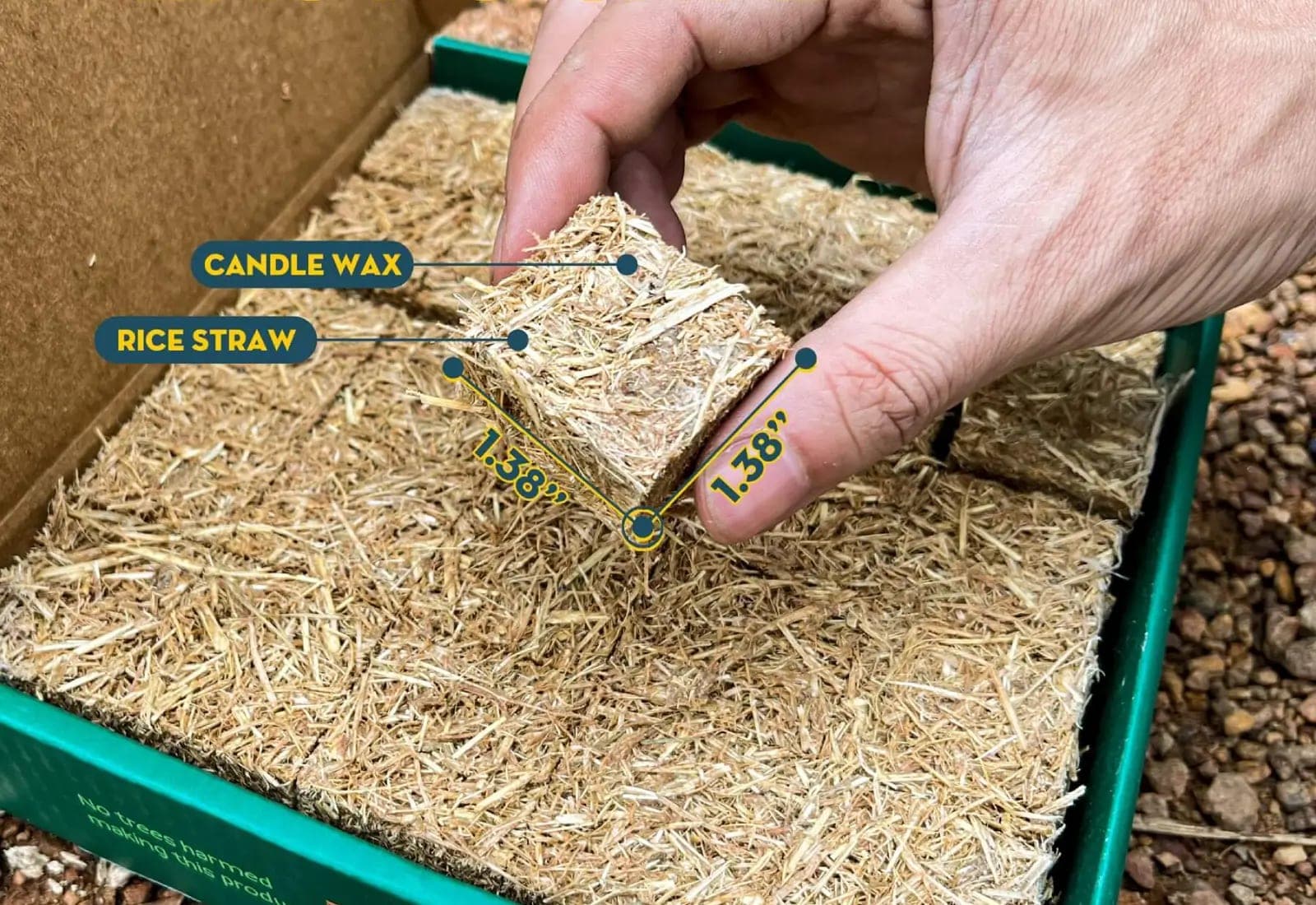
Most published comparisons in this category are written by one of the parties and score the other two. This one cannot do that honestly: no verified figures for wood-wool or petroleum-based firelighters exist in our records, and inventing a comparison table would be worse than not publishing one.
So this article compares the three types on the criteria that actually decide a listing, and for each criterion states the evidence a buyer should demand — from every supplier, this one included. The trade-offs are stated in prose, where they belong.
The short answer
Rice-straw, wood-wool and petroleum-based firelighters differ in raw material, bulk, odour in handling and the story a retailer can resell. On the criteria that decide a listing, no supplier's marketing settles the question: ask each for composition, shelf life, moisture behaviour and landed cost per case, in writing.
The criteria that decide a listing
Read the middle column as a purchasing instruction. If a supplier cannot produce that evidence, the line is unverified, whatever their datasheet says.
| Criterion | Evidence to request | Ulstraw’s documented position |
|---|---|---|
| Composition | The full material list by name, published where your compliance team can read it. | Rice straw and candle wax, published per SKU on the product pages. |
| Burn window | The figure, plus whether it is a manufacturer statement or a test result, and the protocol used. | 7–10 minutes, stated by the manufacturer. No test protocol is fixed, so no report is claimed. |
| Moisture behaviour | How the product behaves after storage in a humid warehouse, and what evidence exists for it. | Product copy describes the wax seal as water-resistant. A moisture test report is on request and no result is published. |
| Shelf life | The stated life, and what it is based on. | 2 years, published per SKU. |
| Pack and carton data | Pack weight, pack dimensions, units per carton and carton weight — you cannot cost freight without them. | 600 g to 1,200 g per pack; pack dimensions published per SKU. Carton configuration is set per programme. |
| Landed cost per case | Ex-works price, carton cube, and the Incoterm quoted — three numbers, not one. | Quoted per programme against the brief. |
| Raw-material continuity | Where the input comes from, and what happens in the off-season. | Rice straw bought from farmers after harvest; intake follows the rice calendar. |
| Market compliance | Which requirements apply in your destination market, confirmed per market. | Confirmed per destination market and issued on request. No standard number is cited until it has been verified. |
| The story you resell | Whether every claim in it can be evidenced without the word “approximately”. | Residue bought after harvest, pressed in Thanh Hoa; impact quantities are not published here because the method is not published. |
Where each type gives way
Rice straw. The raw material is a harvest residue, which is the strength of the story and the source of the operational constraint: intake is seasonal, and it has to be dried, sorted and stored rather than ordered. The evidence base is young — the burn, moisture and odour protocols are not fixed yet — so a buyer who needs test reports at listing rather than at reorder should say so in the brief.
Wood wool. The established alternative in the same shelf position. Its recurring sourcing question is bulk: fine wood fibre packs light and takes volume, which shows up in freight rather than in the unit price, so the comparison must be run on landed cost per case rather than on ex-works cost per pack.
Petroleum or alcohol-based blocks. Usually the cheapest per ignition and the most predictable in performance. What they trade away is the handling smell and the origin story, and both of those are increasingly what a retail buyer is being asked to defend. Whether that trade is worth making is a range decision, not a technical one.
How to run the comparison
- Fix the unit. Compare cost per case delivered to your warehouse, never per pack ex-works.
- Send every supplier the same criteria table above, and ask for the middle column in writing.
- Mark each answer as statement or test result. Score only what is evidenced.
- Sample all three types in the same week, in the same conditions, with the same person lighting them.
- Ask what happens in month nine, when the raw material is out of season or the mill changes its grade.
Two of those lines resolve into product detail rather than commercial detail; the definitions behind them are set out in the category primer, which also takes the three adjectives this category leans on and states the evidence each one needs before it can enter a specification. Pack-level figures for the rice-straw column are on the 50 Bars product page.
Sources
- Ulstraw product catalogue — composition, pack counts, pack weights, pack dimensions, shelf life and the stated burn window, published per SKU at /products.
- Ulstraw ODM and private-label programme — formats offered, pack configurations, markets served, the four-step sampling process and the documentation list, published at /odm-private-label.
About the author
Written by Nguyễn Xuân Tài, founder and chief executive of ULSTRAW joint stock company (tax code 2803119239), the Thanh Hoa manufacturer that presses rice straw into firelighters. He presented the project when it won the Start-up category of the Social Business Creation competition in October 2023, and he answers ODM and private-label briefs himself. More on the company and how it is structured is on the about page.
Revision history
Published in this revision. Figures shown as “on request” are open questions logged in the repository, not omissions; this article is updated in place on the day each one is confirmed, and the change is noted here.
Next step
If you are evaluating Ulstraw as a supplier, start with the ODM and private-label programme page: it carries the current specification table, the four-step sampling process and the documentation list. To request a sample or a quotation, use the contact form and state your market, the volume you expect in the first twelve months, and the date you need goods on the water.
Ready for a cleaner way to light your fire?
Explore Ulstraw fire starters