Jul 28, 2026 · Manufacturing · 7 min read
How Ulstraw Makes Firelighters from Rice Straw in Vietnam
The four production stages behind the block, what is fixed, what a private-label buyer can change, and which figures are still open.
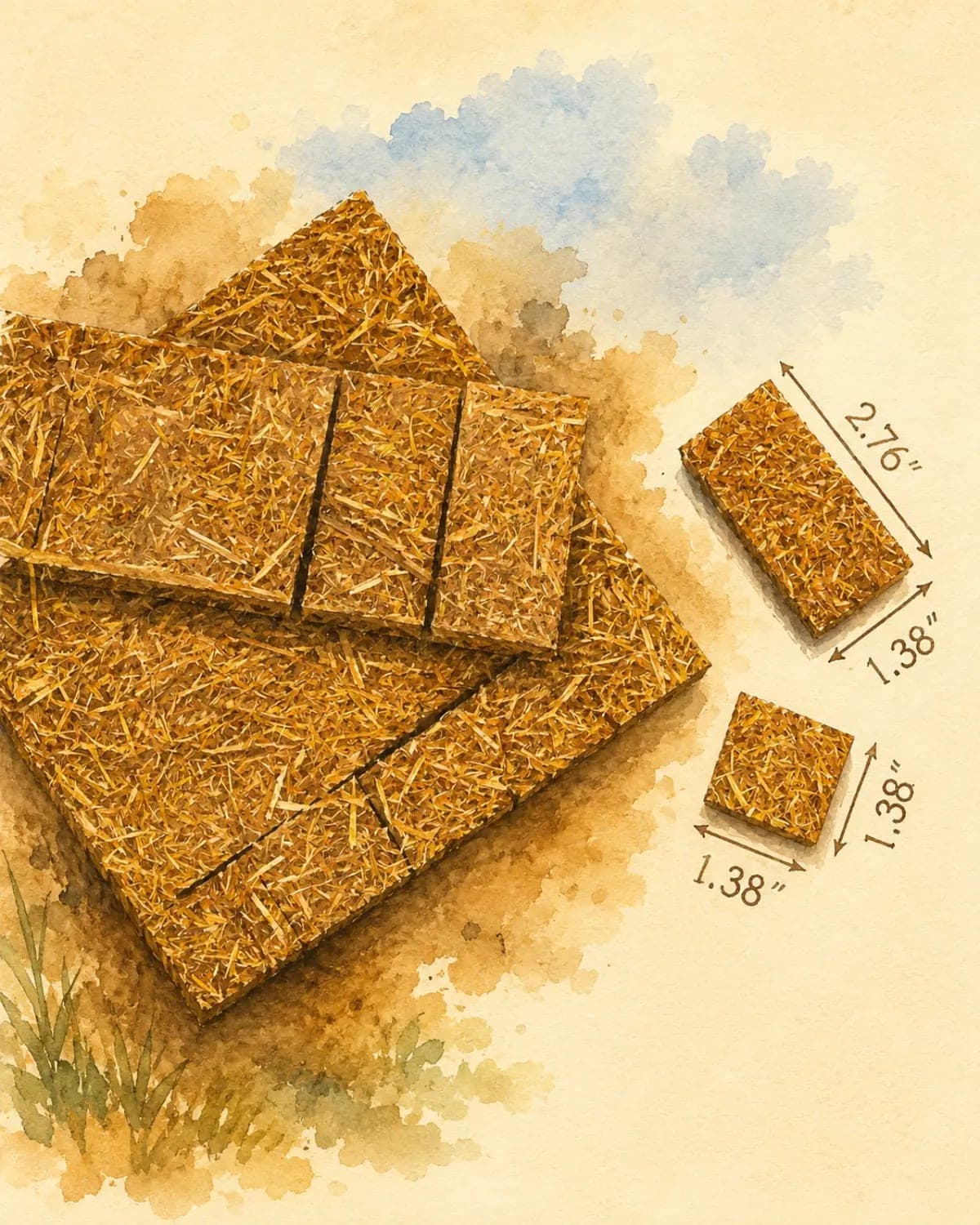
A sourcing buyer asking how a product is made is rarely curious about machinery. The question underneath is usually about supply risk: where the raw material comes from, what happens when it runs short, and which parts of the process can be changed for a private-label programme without changing the product.
This article walks the four stages Ulstraw publishes, states what each one fixes, and is explicit about the capacity figures that are not settled yet.
The short answer
Ulstraw buys rice straw from farmers after harvest, dries and sorts it close to the fields, compresses the fibre into cubes or bars with a protective wax seal, and packs them for retail or private-label programmes. Production runs in Thanh Hoa, Vietnam. The composition is rice straw and candle wax.
Stage 01 — Harvest
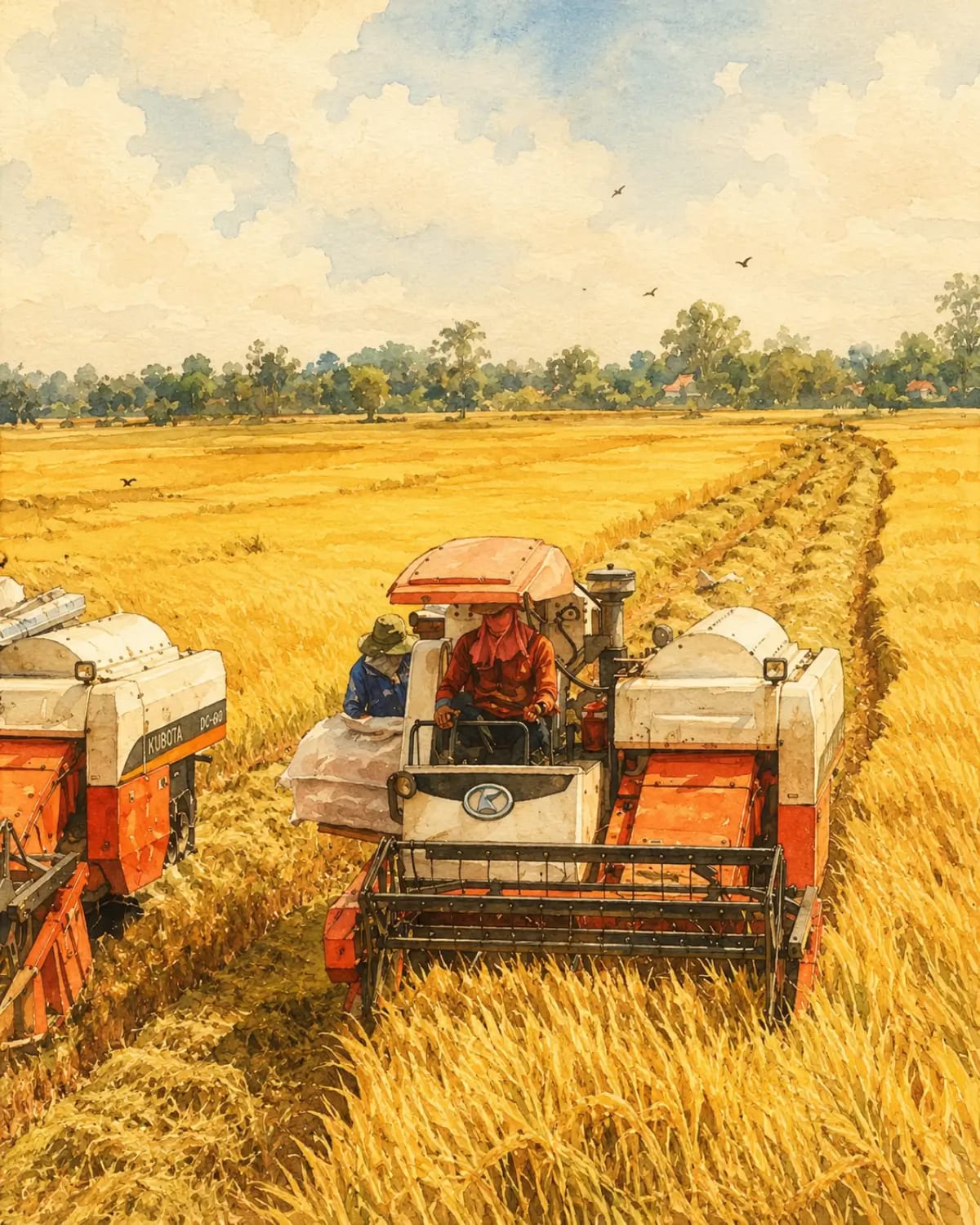
Rice straw is the residue left once the grain has been taken off. The International Rice Research Institute treats its handling as a management problem in its own right, because the volume appears all at once and has to be moved, incorporated or disposed of within days of the harvest.
Ulstraw buys that straw from farmers rather than taking it as waste. For a buyer, the operational consequence matters more than the story: raw-material intake follows the rice calendar, not a mill schedule, so supply planning is seasonal at the front of the process and is smoothed by drying and storage rather than by buying more often.
Stage 02 — Dry and sort
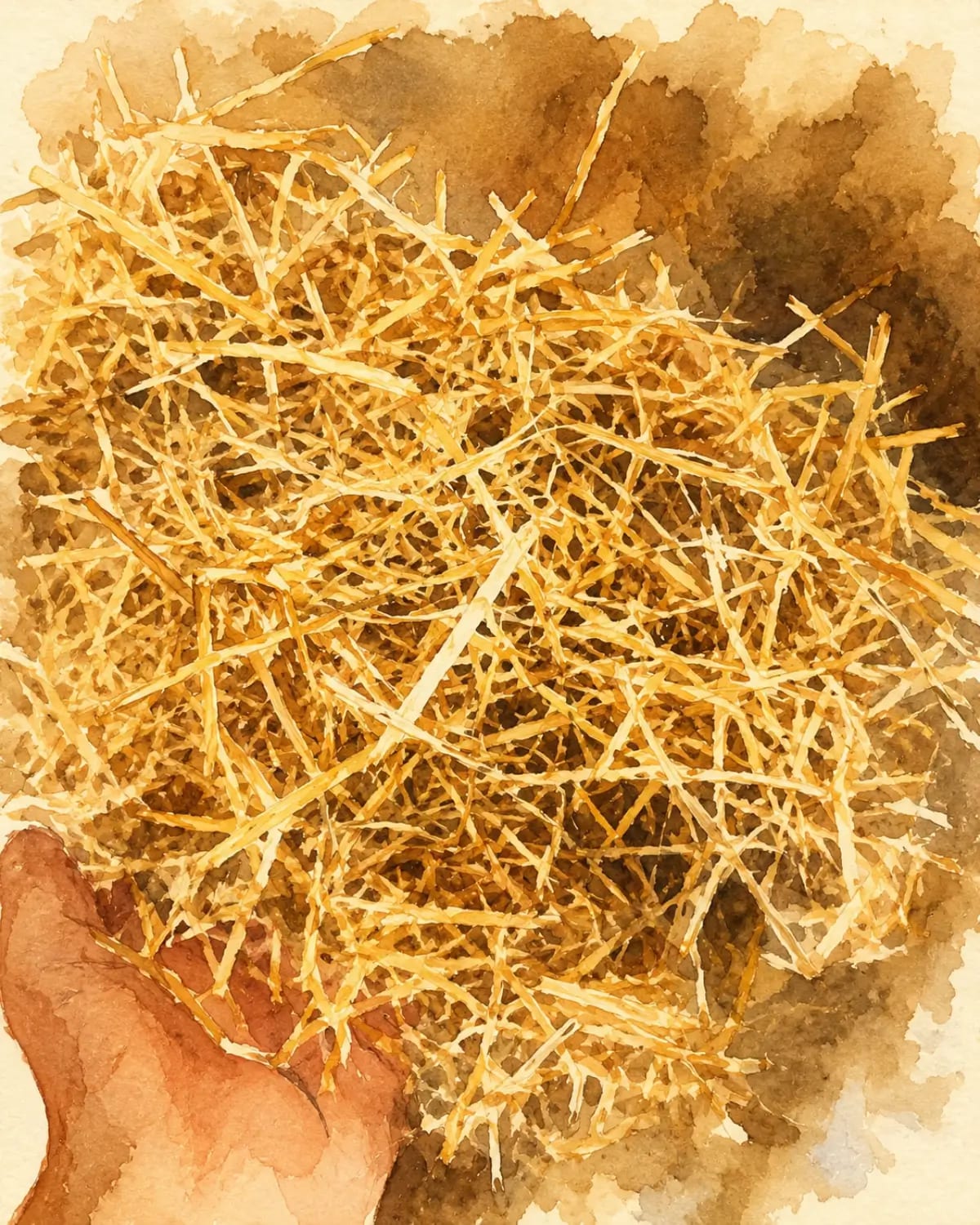
The straw is dried and sorted close to where it was collected. Doing it there keeps transport light: wet, unsorted straw is mostly volume and water, and moving it to the press before sorting would put cost into the product for no yield. This is also the stage that governs how consistent the finished block is, because it decides what fibre reaches the press.
Stage 03 — Press
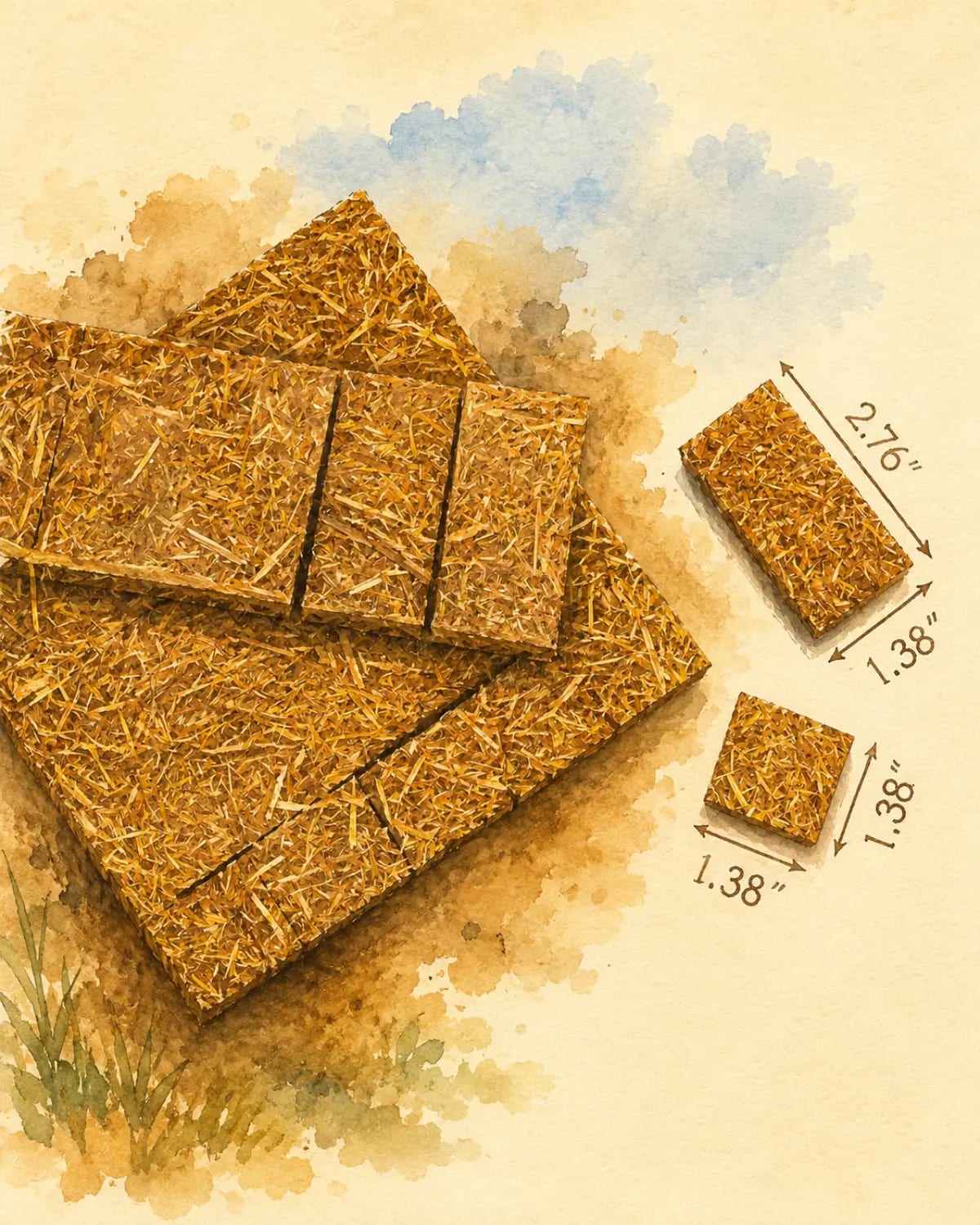
Fibre is compressed into the finished format and sealed with wax. The seal is doing structural work as well as fuel work: it holds the block together through packing, carriage and shelf life, and it supplies the sustained flame. Both formats on the line today — cubes and bars — come out of this stage with the same composition, and differ in shape and in the pack counts they are sold in.
Stage 04 — Light

The finished block is lit directly, without accelerant poured on top. The published burn window is seven to ten minutes, which is stated by the manufacturer rather than measured under an agreed protocol — the burn-time and moisture test protocol is not fixed yet, so no test report is published and none is claimed. Treat the figure as a design target you are entitled to verify on your own sample.
Capacity, and what is not published yet
Three figures decide whether a manufacturer can carry your programme, and all three are open questions on this line at the time of writing. They are shown here as they are shown on the ODM page, as questions to put in a brief rather than as estimates.
| Figure | Status | Why it matters to you |
|---|---|---|
| Monthly capacity | On request — ask in your brief | Decides whether a launch volume plus replenishment can be met without a second supplier. |
| Minimum order quantity | On request — ask in your brief | Sets the smallest commitment per SKU, and therefore how many pack variants are affordable. |
| Lead time | On request — ask in your brief | Sets the date you have to approve artwork by to hit a season. |
| Formats offered | Pressed cubes and pressed bars | The body of the product is fixed; the pack around it is not. |
| Pack configurations | 50 and 100 cubes; 30 and 50 bars, 600 g to 1,200 g | The counts already tooled and packed, and the cheapest place to start. |
| Markets already served | Vietnam and the United States | Evidence the line has shipped, not just quoted. |
What a private-label buyer can change
The useful distinction is between the block and the pack. The block — composition, format, wax seal — is fixed on this line. The pack is where a programme is built: pack count, primary packaging, label language, carton configuration and the artwork on all of it. That division is what makes Ulstraw an ODM rather than an OEM supplier, and the trade-offs it creates are set out in the OEM, ODM and private-label buying guide.
One element of this article is deliberately missing. There is no factory video and therefore no transcript published with it; when one is produced, the transcript is published alongside it rather than the video alone. The photography above is the site’s own, taken at the stages it describes, and the company behind it is described on the about page. Its recognition in the Social Business Creation competition is documented in the report of that final.
Sources
- International Rice Research Institute, Rice Straw Management — rice straw as the residue left at harvest, and the management options open to a grower.
- Ulstraw ODM and private-label programme — formats offered, pack configurations, markets served, the four-step sampling process and the documentation list, published at /odm-private-label.
- Ulstraw product catalogue — composition, pack counts, pack weights, pack dimensions, shelf life and the stated burn window, published per SKU at /products.
About the author
Written by Nguyễn Xuân Tài, founder and chief executive of ULSTRAW joint stock company (tax code 2803119239), the Thanh Hoa manufacturer that presses rice straw into firelighters. He presented the project when it won the Start-up category of the Social Business Creation competition in October 2023, and he answers ODM and private-label briefs himself. More on the company and how it is structured is on the about page.
Revision history
Published in this revision. Figures shown as “on request” are open questions logged in the repository, not omissions; this article is updated in place on the day each one is confirmed, and the change is noted here.
Next step
If you are evaluating Ulstraw as a supplier, start with the ODM and private-label programme page: it carries the current specification table, the four-step sampling process and the documentation list. To request a sample or a quotation, use the contact form and state your market, the volume you expect in the first twelve months, and the date you need goods on the water.
Ready for a cleaner way to light your fire?
Explore Ulstraw fire starters